📅 Last Updated: 2026-04-18 · Verified by the SuperAce88 editorial team — all RTP figures, game names and strategy advice re-checked against live 2026 lobby data.
In 2026, online slot games continue to attract millions of players in the Philippines. Slots are colorful, fast, and easy to play (see our complete beginner’s guide to how slot machines work)—but they are also the reason why most players lose money in the most painful way possible.
Not because the game is unfair.
Not because the RTP is fake.
👉 But because players quit—or lose control—at the worst possible moment: the lowest point.
This article explains why that happens, how slot games take advantage of it, and what you can do to avoid becoming part of the 90%.
High-traffic focus keywords used in this article include:
why slot players lose, slot losing streak, slot bankroll management, online slots Philippines, slot strategy 2026
What Is the “Lowest Point” in Slot Games?
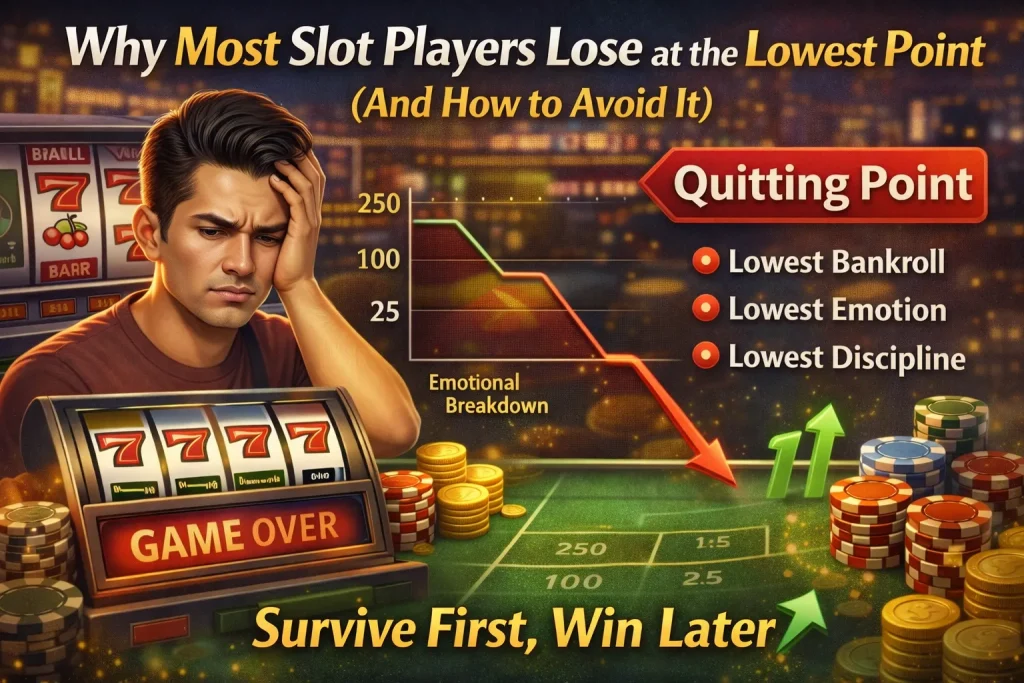
The “lowest point” is not just about money. It is a combination of three collapses happening at the same time:
- Lowest bankroll – your funds are almost gone
- Lowest emotion – frustration, anger, regret
- Lowest discipline – rules are forgotten
At this point, players usually do one of two things:
- Bet bigger to “recover fast”
- Quit right before variance changes
Both decisions are driven by emotion, not logic.
Why Slot Games Feel Like They Pay Right After You Quit
Many players say:
“I always leave just before it hits.”
This feeling is not magic—it’s statistics and psychology.
Slot games are built on:
- RNG (Random Number Generator)
- Long-term RTP
- Short-term volatility
That means:
- Wins are uneven
- Losses often cluster
- Recovery usually comes after pressure
👉 Players with poor bankroll control never survive long enough to see recovery.
The game didn’t cheat you—you ran out of time and money.
The Psychology of Chasing Losses
When players reach the lowest point, the brain switches from logic to survival mode.
Common thoughts:
- “Just one more spin”
- “I can’t stop now”
- “I’m due for a win”
This is called loss-chasing behavior, and it is the fastest way to destroy a bankroll.
Instead of lowering bets or stopping, players:
- Increase bet size
- Ignore original plans
- Burn through remaining funds
👉 This is why most losses happen near the end of a session, not at the beginning.
Why Slot Games Punish Emotional Players
Slot games don’t punish everyone—they punish impatience.
Players who:
- Bet too large
- Play too fast
- Have no exit plan
experience higher volatility and faster bust-outs.
On popular platforms such as SuperAce88, many players lose not because of bad luck, but because they never planned how long they wanted to play.
Slots reward patience—not courage.
How Bankroll Planning Prevents Lowest-Point Losses
This is where most players fail—and where smart players survive.
A simple but powerful rule:
The 250-Bet Rule
Divide your total bankroll into at least 250 equal bets.
Why this works:
- Extends playtime
- Reduces emotional pressure
- Absorbs losing streaks
- Gives randomness time to balance
With proper bet sizing, players have up to a 90% chance of playing more than 3 hours, instead of busting in 20 minutes.
👉 Time is your real advantage in slot games.
Why “Small Bets” Beat “Brave Bets”
Many players think:
- Bigger bets = faster wins
Reality:
- Bigger bets = faster emotional collapse
Small, controlled bets:
- Keep emotions stable
- Reduce variance impact
- Prevent panic decisions
Slot games are not about bravery.
They are about survival.
How Smart Players Exit Before Emotional Collapse
Winning players don’t rely on feelings.
They rely on rules decided before the game starts.
Three Exit Rules Every Slot Player Needs
1️⃣ Stop-Loss Rule
Decide the maximum you are willing to lose.
When reached—stop immediately.
2️⃣ Take-Profit Rule
Decide how much profit is “enough.”
When reached—cash out and leave.
3️⃣ Time-Based Exit
Decide how long you will play (e.g. 60–90 minutes).
No extensions. No excuses.
👉 If you hesitate, you lose discipline.
Why Most Players Quit at the Worst Time
Most players:
- Play too big
- Lose too fast
- Reach emotional breaking point
- Quit in frustration
They don’t quit because the game is bad.
They quit because their plan was missing.
Slots are a long game disguised as a short one.
The Game Didn’t Beat You—Timing Did
Slot games are random.
Randomness is neutral.
What destroys players is:
- Poor timing
- Poor bankroll structure
- Emotional exits
If you learn to:
- Plan your bankroll properly
- Respect slot variance (low vs high volatility)
- Exit without emotion
you immediately move ahead of the majority.
Final Thoughts: Survive First, Win Later
In 2026, successful slot play is not about jackpots.
It is about lasting long enough.
If you can avoid losing at the lowest point, you already beat:
- 90% of players
- Most emotional decisions
- The biggest hidden trap in slot games
Slots don’t defeat players—impatience does.
Frequently Asked Questions (2026)
Is there a “best time” to play slots in 2026?
No. Modern online slots use certified RNGs, so outcomes are independent of the clock. What matters is your bankroll, your stop-loss, and your emotional state when you click spin — not the hour on the wall.
What stop-loss percentage do most disciplined players use?
A common rule is to cap each session at 30–50% of your allocated bankroll. When the loss hits that ceiling, stop — regardless of how close you feel to a “breakthrough.” Chasing losses is the single biggest reason slot bankrolls disappear.
Does higher RTP guarantee I’ll win more?
No. RTP is a long-run statistic calculated across millions of spins. In any single session, variance dominates. A 96.5% RTP slot can still bleed your balance dry if you run into a cold streak and can’t exit cleanly.
I just hit a losing streak — should I change the game?
Changing games won’t change your odds, but changing your state will. If you’re tilted, walk away from the lobby entirely. Come back tomorrow with a fresh bankroll plan, not a “revenge spin.”
Further Reading
- Slot volatility explained: low vs high variance slots — learn how variance actually shapes your session.
- How online slot machines work: a complete player’s guide — the mechanics behind every spin.
- Slot machine secrets: choosing the best SuperAce88 games — game-selection strategy for 2026.
- How to pick safe online casino games in the Philippines — stay on licensed, verified platforms.