
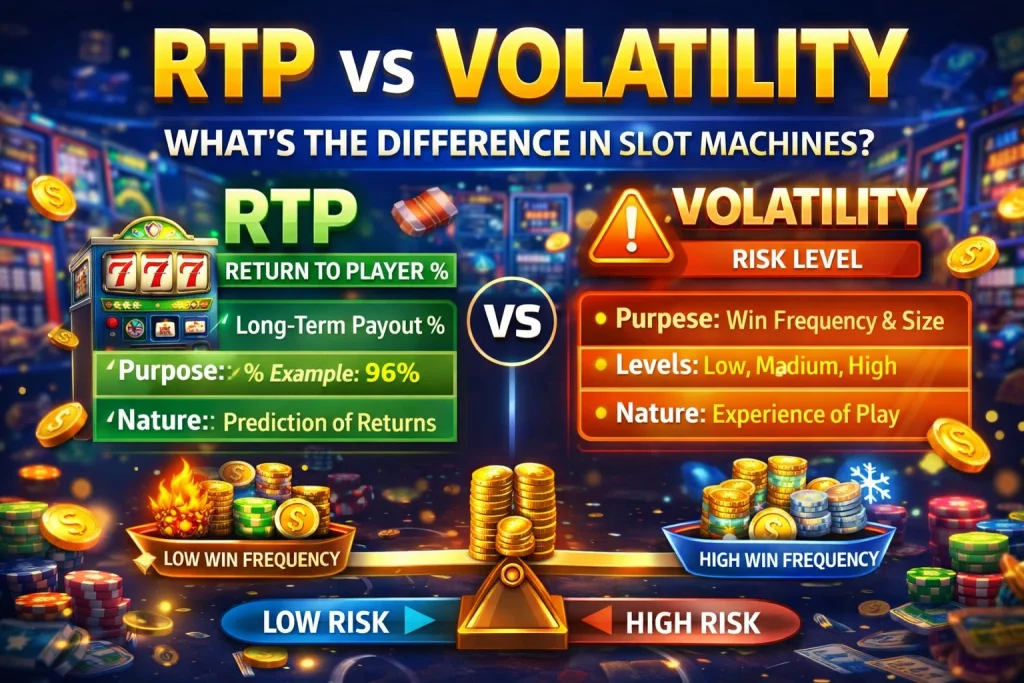
Slot Machines?
When playing online slot games, two terms appear frequently: RTP (Return to Player) and volatility.
Many players assume these two concepts mean the same thing, but they actually describe completely different aspects of a slot machine.
Understanding the difference between RTP and volatility is essential for choosing the right game and managing risk effectively when playing on platforms like Superace88.
In this guide, we will break down both concepts and explain how they work together.
What Is RTP?
RTP, or Return to Player, represents the long-term payout percentage of a slot machine.
For example:
- A slot with 96% RTP returns $96 for every $100 wagered over time
- The remaining 4% represents the house edge
RTP is calculated over millions of spins and reflects the theoretical return, not short-term outcomes.
Slots available on Superace88 are designed with specific RTP values to ensure fairness and consistency.
What Is Slot Volatility?
Volatility (or variance) measures how often and how much a slot pays out.
It defines the risk level of the game.
- Low volatility → frequent small wins
- High volatility → rare but large payouts
Unlike RTP, volatility affects the experience of gameplay, not the long-term return.
Key Differences Between RTP and Volatility
To understand how they differ, compare them directly:
| Factor | RTP | Volatility |
|---|---|---|
| Purpose | Long-term return | Risk level |
| Impact | Profitability over time | Gameplay experience |
| Measurement | Percentage (%) | Low / Medium / High |
| Short-term effect | Limited | Significant |
A slot can have high RTP but still feel risky if it has high volatility.
How RTP and Volatility Work Together
RTP and volatility are designed together to shape how a slot behaves.
For example:
Scenario 1
- RTP: 96%
- Volatility: Low
→ Frequent wins, smaller payouts
Scenario 2
- RTP: 96%
- Volatility: High
→ Rare wins, but potentially huge jackpots
Even though both games have the same RTP, the player experience is completely different.
This is why players on Superace88 should consider both factors when choosing games.
Which Is More Important?
The answer depends on your playing style.
If you prefer:
- Longer sessions
- Stable gameplay
- Lower risk
👉 Choose low volatility slots
If you prefer:
- Big wins
- High excitement
- Risk-taking
👉 Choose high volatility slots
For long-term value:
👉 Focus on high RTP
Common Misconceptions
Many players misunderstand how RTP and volatility work.
Some common myths include:
- “High RTP guarantees frequent wins”
- “Low volatility means safe profits”
- “High volatility means better chances of winning big every time”
In reality:
- RTP affects long-term return
- Volatility affects short-term experience
- Neither guarantees specific outcomes
How Smart Players Use Both Concepts
Experienced players combine both RTP and volatility when choosing games.
For example:
- Use high RTP + low volatility for steady play
- Use high RTP + high volatility when chasing jackpots
- Adjust bet size based on volatility
Players on Superace88 who understand both concepts can make more strategic decisions.
Final Thoughts
RTP and volatility are two of the most important factors in understanding slot machines.
While RTP tells you how much a game returns over time, volatility determines how that return is distributed.
By combining both concepts, players can choose games that match their goals, risk tolerance, and playing style on Superace88.
Understanding this balance is key to smarter and more enjoyable gameplay.
Related Reading
JILI RNG Secrets Most Players Don’t Know ↗
How to Spot Hot or Cold JILI Slot Cycles ↗
Best Time to Win Big on JILI Slots ↗