Quick answer: set money and time boundaries before gambling, not while emotions are already involved. Protect essential expenses first, treat any remaining gambling amount as optional entertainment spending that can be lost, choose a fixed end time, and write down the triggers that mean “stop now.”
A budget does not make gambling safe, improve the odds, protect winnings, or guarantee that you will follow the plan. If you repeatedly break a limit, the next step is stronger distance—cooling off, blocking access, exclusion, and trusted support—not a larger budget.
If essential bills or debt are involved, stop and use the debt-pressure action guide.

Build an Essential-Money Firewall
Start by identifying money that must never be exposed to gambling:
- food, housing, utilities, medicine, transport, and education;
- minimum debt payments and repayment agreements;
- family support and money held for another person;
- insurance, taxes, and work expenses;
- emergency savings.
Only after those needs are protected can you ask whether optional entertainment money remains. If losing that amount would cause stress, require a reload from essentials, or delay an obligation, the affordable gambling budget is zero.
An Entertainment Budget Is Not a Safety Guarantee
There is no universal “safe percentage” of income. Two people with the same pay can have different debts, dependants, health costs, and savings needs. Do not copy an arbitrary percentage from an article.
Define the budget as a maximum cost for entertainment, not capital that must produce a return. Do not count bonuses, expected wins, cashback, or future withdrawals as money available for bills.
| Boundary | Write before play | What it does not do |
|---|---|---|
| Spending limit | Maximum optional amount for the session/period | Guarantee that the amount is safe to lose |
| Time limit | Start time, stop time, and planned breaks | Improve probability |
| No-reload rule | No new deposit in the same session | Recover a loss |
| Stop trigger | Specific thought, behavior, or condition that ends play | Diagnose a gambling disorder |
| Cooling-off action | How access will be interrupted after a trigger | Replace qualified support when harm is present |
Set a Time Limit With an Exit Action
“Play for one hour” is incomplete unless you also decide what happens at the end. Set an alarm away from the game screen. When it rings:
- stop placing new wagers;
- close the game and account session;
- record the closing balance and time;
- leave the device or location;
- do not reopen the session that day.
Do not extend the time because you are ahead, behind, near a bonus, or waiting for a pattern. The limit is an exit boundary, not a forecast.
Create Stop Triggers Before You Need Them
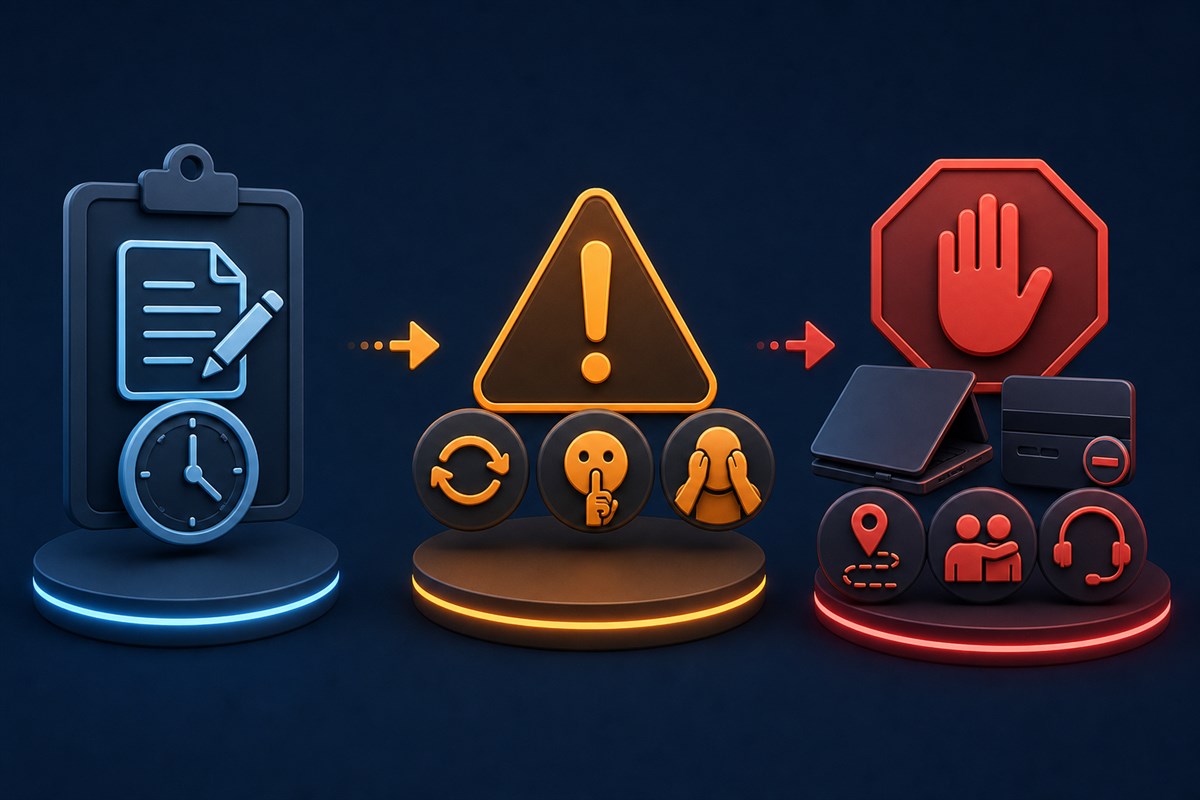
| Trigger | Immediate stop action | Escalation |
|---|---|---|
| Budget or time reached | Close the session | Keep the next planned session unchanged; do not compensate |
| Desire to recover a loss | Do not place the next wager | Start cooling-off and tell a trusted person |
| Reload or higher-limit thought | Remove the payment method or block the transaction | Use access blocking or exclusion |
| Essential money used | Stop all gambling transfers | Protect remaining essentials and seek financial/support help |
| Secrecy, distress, anger, intoxication, or exhaustion | Leave the account/device | Contact trusted or qualified support |
| Repeated limit breaking | Do not create another voluntary limit | Use stronger blocking, cooling-off, or exclusion |
Use Cooling-Off to Create Distance
A cooling-off plan should reduce immediate access and decision pressure. It may include:
- logging out and removing saved payment methods;
- turning off gambling notifications and promotional messages;
- using device or network blocking tools;
- handing financial access or accountability to a trusted person where appropriate;
- using an official platform, regulator, or multi-operator exclusion route when verified;
- replacing the session with a planned non-gambling activity.
No SuperAce88-specific cooling-off, limit, or exclusion function is described here. Check current terms and verified support. PAGCOR publishes responsible-gaming and exclusion information, but this page does not claim that every route covers every website.
Keep a Complete Record
Record the session even when the result feels unimportant:
- date, start time, end time, and breaks;
- every deposit and withdrawal;
- opening and closing balance;
- bonuses accepted and their conditions;
- fees, reversals, and pending transactions;
- limits set and whether each was followed;
- the trigger that ended—or failed to end—the session.
A complete record prevents a large withdrawal from hiding previous deposits or broken limits. Review net spending and time, not only wins.
Choose Trusted Support Before a Crisis
Write down two contacts while calm:
- a trusted person who can receive an honest message such as “I reached a stop trigger and need help staying offline”;
- an official or qualified support route verified independently, such as PAGCOR responsible-gaming/exclusion information or a local clinical service.
Do not wait for a diagnosis. Use support when gambling affects bills, debt, relationships, sleep, work, secrecy, mood, or your ability to stop. If there is immediate danger or a mental-health crisis, contact local emergency or qualified health services.
A Copyable Pre-Session Plan
Essential money protected: ______
Optional entertainment cap: ______
Start and stop time: ______
No-reload rule: yes
My three stop triggers: ______
Cooling-off action: ______
Trusted contact: ______
Official/qualified help route: ______
If you cannot complete the plan honestly, do not start the session.
Frequently Asked Questions
How much of my income is safe to gamble?
There is no universal safe percentage. Protect essentials, debts, family obligations, and emergency savings. If a loss causes harm or pressure, the affordable amount is zero.
Does a loss limit guarantee I cannot lose more?
No. A voluntary limit works only when followed and may not cover every account or payment route. Repeatedly breaking limits is a trigger for stronger blocking or exclusion.
Should I set a win limit?
Do not turn a desired win into a reason to continue. A fixed end time and spending cap are clearer because they do not depend on an uncertain result.
What if I already chased a loss?
Stop the next transaction, protect remaining essential money, start cooling off, tell a trusted person, and use an official or qualified help route. Do not gamble again to repair the loss.
Sources
- PAGCOR Responsible Gaming
- PAGCOR Exclusion Information
- World Health Organization: Gambling
- Responsible Gambling Council: Plan Before You Play
Prepared by superace88 Casino Guide 編輯室. This guide provides practical boundaries and help paths. It does not make gambling safe or replace qualified clinical, financial, or legal support.