
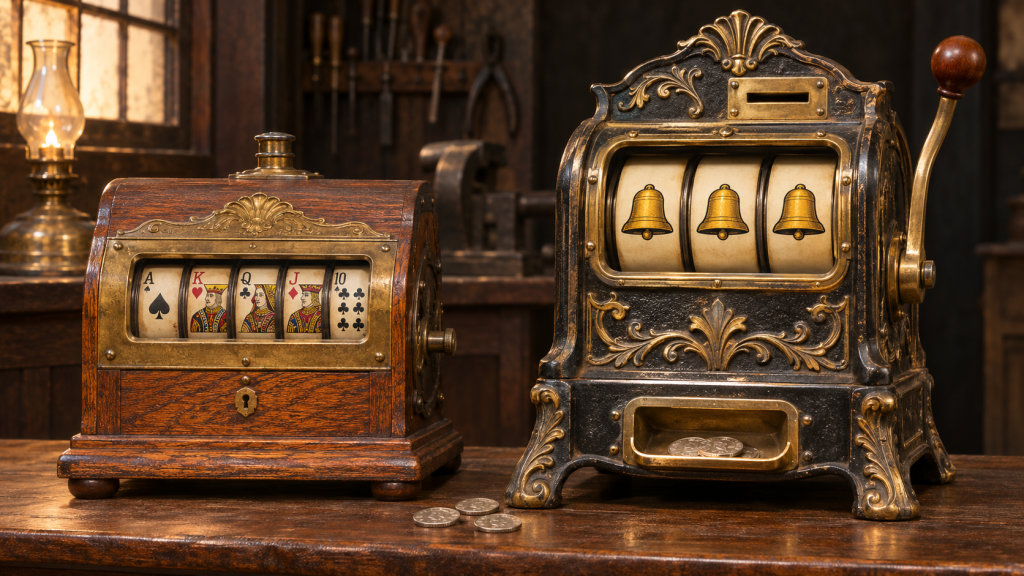
Before the Liberty Bell made three spinning reels familiar, coin-operated poker machines could deal a five-card hand without a dealer. A player dropped in a nickel, pulled a lever and read the cards through a small window. If the hand qualified for a prize, the person behind the counter handled the reward. This superace88 guide traces how that simple interaction evolved into automatic coin payouts and, eventually, the spin button on a phone.
What Came Before the Slot Machine?
Mechanical poker machines and countertop devices known as trade stimulators were already using coins to start short games in the late 19th century. Some used card drums, while others used wheels or spindles. The business hosting the machine could offer cigars, drinks or other merchandise, depending on the device and venue.
| Early machine | What the player saw | How the reward worked |
|---|---|---|
| Sittman and Pitt poker machine | Five drums displayed a poker hand | Staff checked the hand and supplied the venue’s prize |
| Trade stimulator | A wheel, spindle or other mechanical display | Some models offered merchandise or extra value in trade |
| Charles Fey’s Liberty Bell | Three reels aligned symbols through a window | The machine dispensed coins for qualifying combinations |
How Sittman and Pitt Turned Poker Into a Reel Game
The Brooklyn firm Sittman and Pitt made coin-operated card machines in the early 1890s. Its five-drum poker design carried 50 card faces. When the drums stopped, one card from each drum appeared in the window, creating a hand that players could read using familiar poker rankings.
For a player used to card games, the appeal was immediate: you could recognize a promising hand the moment the drums stopped. The machine handled the reveal, and an attendant checked the result and issued any reward. That division of work sets up the next step in this superace88 history.
Why Shops Used Trade Stimulators
A trade stimulator gave shoppers a reason to stop at the counter. One type combined a purchase, such as a cigar, with a chance for an extra prize or greater value in merchandise. Wheels were common, and a player could read the result from a pointer or display. These devices shared the coin-and-reveal pattern of early slots, with the reward often tied to what the business sold.
How the Liberty Bell Changed Slot Machine Design
Charles Fey’s Liberty Bell emerged in San Francisco in the late 1890s. Its three reels displayed familiar symbols such as horseshoes, card suits and bells. The cabinet paid coins automatically when the reels stopped on qualifying combinations. Three bells together produced the top award.
Why Three Reels Made Automatic Payouts Practical
A five-card poker game uses several hand rankings. The Liberty Bell’s mechanism had a smaller set of symbol combinations to recognize and could release the appropriate number of coins directly. The player could see the result and collect a payout at the same cabinet. For superace88 readers who know the modern paytable, the parallel is easy to spot: both map specific symbol combinations to payout values.
Where the Bell, Fruit and BAR Symbols Came From
The Liberty Bell gave later designers a recognizable bell symbol. Fruit became prominent in the early 20th century as some manufacturers paired reel machines with fruit-flavored gum. Cherries and lemons reflected those flavors, and the familiar BAR symbol is commonly traced to gum branding. Today those symbols still give classic-style slots their visual identity.
| Familiar feature | Historical connection |
|---|---|
| Bell symbol | Charles Fey’s Liberty Bell and the three-bell top combination |
| Cherries and lemons | Fruit flavors associated with early gum-dispensing machines |
| BAR symbol | Gum branding associated with early fruit machines |
| Side handle | The single lever behind the nickname “one-armed bandit” |
How Mechanical Reels Became Online Slots
Electromechanical machines added electrical components to physical cabinets. Video slots moved the reels onto a screen, making room for more varied layouts and bonus displays. Online slots carried that screen-based design into browsers and onto mobile devices.
You can still see the old sequence in a modern slot: start the spin, watch the symbols settle and read the result. The difference shows up in the paytable. A classic-style slot might use a single payline. A video slot can use multiple paylines or ways to win, with free spins or multipliers defined in its rules. If you arrived at this superace88 guide while comparing slot styles, open the game’s paytable and check which symbols pay, which combinations qualify and how any feature changes the payout.
Frequently Asked Questions About Early Slot Machines
Did the First Reel Games Pay Automatically?
Early five-drum poker machines relied on venue staff to check the hand and provide any reward. Fey’s Liberty Bell helped establish automatic coin payouts as a feature of the three-reel slot cabinet.
Why Were Slot Machines Called One-Armed Bandits?
The “arm” was the single side lever players pulled to spin the reels. “Bandit” reflected the machine’s reputation for taking players’ coins. The name stuck even as many cabinets adopted a front-facing spin button.
What Is the Difference Between a Trade Stimulator and a Classic Slot?
A trade stimulator helped draw customers to a shop or counter and could award goods or value in trade. A classic three-reel slot used a defined list of winning symbol combinations and could dispense coins from the cabinet.


