Before registering with an online casino or uploading identity/payment documents, find out who controls the data, what is collected, why it is used, who receives it, whether it may move across borders, how long it is kept, and how you can exercise privacy rights.
Quick answer: A usable privacy notice should let you connect each data category to a purpose, stated basis, recipient, retention period or criteria, security description, and rights/contact route. If the controller is unnamed, the notice conflicts with the domain or terms, or an ID upload route cannot be verified, stop before sharing data and request clarification.
This checklist does not certify SuperAce88 privacy compliance, controller identity, data security, encryption, retention, cross-border transfer, cookie practice, deletion process, or breach history.
Before sharing personal information, start with the exact-domain and operator verification guide.
Start with the data controller and contact
The brand on the screen may not be the company deciding how personal data is used. Find the named personal information controller, legal/company name, address or jurisdiction, privacy/DPO contact, and the domains/services covered by the notice.
Compare those names with the terms and company/operator information. A mismatch is not automatically proof of a violation, but it needs a written explanation before you send identity or payment records.
Build a casino-specific data inventory
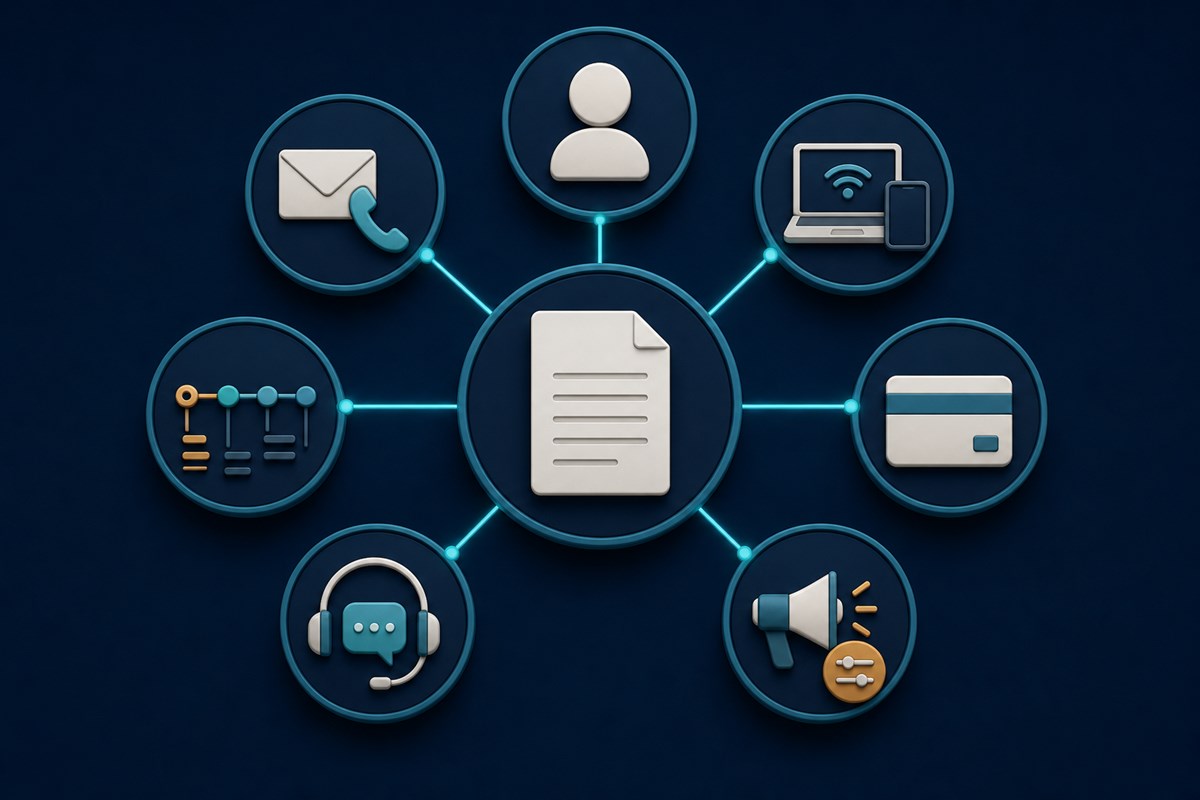
| Data category | Examples to look for | Question |
|---|---|---|
| Identity/KYC | Name, birth date, address, ID image, selfie, source-of-funds evidence | Why is each item required and through which verified route? |
| Contact/account | E-mail, phone, username, recovery details, account status | How is it used for authentication, service and marketing? |
| Device/technical | IP, device ID, browser, OS, cookies, session/login history, location signals | Which functions are security, analytics, fraud review or marketing? |
| Payment/transaction | Method, recipient/sender, amount, currency, reference, bank/e-wallet/wallet evidence | Who receives it and how long is it retained? |
| Gaming/account activity | Deposits, withdrawals, balances, bets/games, bonus, limits, exclusions | What decisions or profiling use this history? |
| Support/communications | Chats, e-mails, calls, complaints, uploaded attachments | Are calls recorded and who can access the record? |
| Marketing | Preferences, campaign source, affiliate/referral, audience/profile fields | How can each channel be changed or stopped? |
Match collection to a clear purpose and basis
The Philippines National Privacy Commission says people should be informed about the personal data processed, the purposes, the basis when processing is not based on consent, the scope/method, recipients, automated access, controller contact, retention, and rights.
A privacy notice is not automatically the same as consent. Ask which processing is necessary for the account or legal obligations, which is based on a choice, and what happens when a person objects or withdraws a choice. Do not assume that clicking one broad button authorizes every future use.
Check sharing and cross-border transfer
Look for recipient categories such as identity-verification vendors, payment processors, game/platform providers, cloud/hosting services, analytics/advertising services, affiliates, related companies, professional advisers, and regulators or law enforcement.
Ask:
- Are recipients named or described clearly enough to understand their role?
- Does the notice explain when data can leave the Philippines or be accessed elsewhere?
- What accountability or protection does the notice claim for those transfers?
- Can a third party use the data for its own purposes?
- Does the controller remain the contact for rights and complaints?
Do not interpret a generic “trusted partners” phrase as proof that every recipient or transfer is appropriate. Preserve the current notice and ask for the specific recipient category involved in an ID, payment, or account review.
Read retention by data category
“We keep data as long as necessary” is a criterion, not a complete answer. Look for periods or clearer decision rules for identity/KYC, transaction/accounting, gameplay/account, support, security logs, marketing and closed-account data.
Account closure does not automatically mean immediate deletion. Legal, transaction, security or dispute records may follow separate retention rules. Ask what is deleted, blocked, anonymized or retained after closure and which rule supports it. Do not promise deletion or a fixed response period without current legal review.
Cookies and tracking need their own check
A cookie banner does not explain the full tracking system. Review the cookie notice or settings for:
- essential session/authentication/security cookies;
- preference/function cookies;
- analytics/performance tools;
- advertising, affiliate and cross-site tracking;
- provider/recipient, purpose and duration for each category;
- which controls are available and whether changing them affects account functions.
This checklist does not decide which cookies require consent or whether a banner complies with law. That depends on the actual technology, purpose, location and applicable rules and needs qualified review.
Security descriptions have limits
HTTPS means the connection is encrypted; it does not prove that the controller is legitimate or that stored data, staff access, third parties and recovery processes are secure. Likewise, phrases such as “industry standard,” “bank-grade,” or “encrypted” need scope: what data, in transit or at rest, under whose control, and what happens after an incident?
A privacy policy, cookie banner, security icon or DPO name is evidence of a statement—not proof of complete security or compliance. Do not upload data solely because a padlock or seal appears.
KYC documents: verify purpose and disclose the minimum necessary
ID cards, selfies, address records, bank/e-wallet evidence and source-of-funds documents can reveal more than the single fact being checked. Before upload:
- verify the exact company and domain requesting the evidence;
- ask which category/document is required and why;
- use the secure route published by the verified controller;
- ask whether non-essential details may be masked while keeping the document valid;
- do not alter, crop or redact deceptively;
- save the request, upload receipt, privacy notice version and result;
- never send password, OTP, PIN, recovery code, full wallet seed phrase or remote access.
The minimum-disclosure question does not override a lawful verified requirement. It helps the reader ask what is actually necessary and avoid sending extra data through an unsafe channel.
Know the rights and their limits
The NPC describes rights including being informed, access, objection, rectification, erasure or blocking, data portability, and complaint. Rights may have limitations, and the controller may need to verify the identity of the person making a request.
Ask the privacy contact for the current request process instead of sending full identity records in the first e-mail. Keep the request, proof of delivery, identity-verification request, response, reason for any limitation, and complaint/escalation information.

Use a privacy request evidence pack
| Field | Record |
|---|---|
| Controller | Company, contact, exact domain and privacy-notice URL/version |
| Request | Access, correction, objection, erasure/blocking, portability or complaint |
| Scope | Specific account/data/category and date range; avoid asking for another person’s data |
| Identity verification | What was requested, secure route and why it was necessary |
| Timeline | Sent/delivered dates, acknowledgements, case number and responses |
| Outcome | Action taken, data supplied, limitation/reason and next complaint route |
Please confirm the company acting as controller for this account and the secure process for exercising my data rights. My request concerns [specific data/right/date range]. Please explain the minimum information required to verify my identity, provide a case number, and identify any limitation and the complaint route in writing.
Privacy stop signals before registration
- No privacy notice is available before data entry.
- The notice does not name the controller or a usable contact.
- The company/domain conflicts with the terms or regulator record.
- An ID upload arrives only through social media, chat, QR code or unrelated domain.
- Purposes, recipients or retention are so broad that the sensitive request cannot be explained.
- The sender asks for a password, OTP, remote access or unnecessary full payment credentials.
A stop signal is a reason to pause and clarify, not an automatic legal finding. Preserve the evidence and use the official NPC information or qualified advice when a legal conclusion matters.
Frequently asked questions
Does a privacy policy mean a casino is compliant?
No. It states how an organization says it processes data. The statement, actual practice, controller identity and applicable law still need verification.
Can I demand immediate deletion after closing an account?
Do not assume immediate deletion. Ask what is retained, why, for how long, and what rights/limitations apply.
Should I send a full ID to ask a privacy question?
Start by asking for the secure rights-request and identity-verification process. Provide only what the verified controller reasonably needs through that route.
Does this article verify SuperAce88 privacy compliance?
No. It verifies no SuperAce88 controller, privacy practice, cookie, transfer, retention, security, deletion, rights-request process or legal compliance.
Primary sources
- NPC: Right to Be Informed
- NPC: Data Subject Rights
- NPC: Right to Access
- Philippines Data Privacy Act of 2012
- NPC: Privacy Notice and Retention Guidance