superace88
JDB Gaming is a casino game developer with a portfolio spanning slots, fish shooting and other interactive formats. A useful provider review should look beyond colorful graphics and headline prizes to examine the company’s role, its game categories and the mathematics behind individual titles.
For readers researching JDB content through superace88, this guide introduces the supplier, compares selected games using official specifications and explains how RTP differs from volatility.
What Is JDB Gaming?
JDB Gaming describes itself as a global iGaming developer and supplier with more than a decade of experience. Its official company profile identifies fish shooting as a specialty, alongside slots, arcade games, card games and other interactive content. The company also provides localization, technical support and integration services for operators.
This makes JDB a business-to-business content supplier. The distinction matters because the game developer and the casino operator perform different functions.
JDB develops and supplies game content. The operator hosting that content manages player registration, account verification, payments, promotional offers and account support. A review of JDB games therefore cannot establish the quality of every website that lists them.
JDB Company Overview
| Area | Company role or product focus |
|---|---|
| Business model | Game developer and supplier serving operators |
| Specialist category | Fish shooting games |
| Wider portfolio | Slots, arcade games, card games and bingo |
| Operator services | Integration, localization and technical support |
| Player account services | Managed by the hosting casino operator |
JDB’s official portfolio includes bingo alongside its other principal game categories. Availability should still be checked with the individual operator, as a platform may carry only part of the supplier’s catalog.
JDB Game Categories Explained
The differences between game categories are more important than their shared branding. Each format uses its own controls, cost structure and reward conditions.
Slot Games
Slots use symbols and defined winning arrangements to calculate outcomes. Depending on the title, the game may include wild symbols, multipliers, respins or special rounds.
Players should begin with the paytable. It explains which combinations qualify, how rewards relate to the stake and whether optional features require additional payment.
Fish Shooting Games
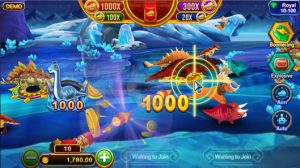
Fish shooting games introduce active interaction with targets. Before playing, check the cost of firing, the available controls and the conditions under which target rewards are awarded.
Aiming controls should not be interpreted as proof that practice guarantees profit. Understanding the interface and understanding the reward mathematics are separate tasks.
Arcade Games
Arcade titles use game-specific structures that can differ substantially from conventional reels. The important questions are what creates a paid action, how the outcome is determined and how rewards are settled.
Card Games
Card titles require careful reading of their individual rules. Betting options, settlement procedures and any commission or multiplayer conditions can affect the experience. A percentage displayed for one card game should not be treated as directly interchangeable with a slot’s specifications.
Bingo Games
Bingo-style games center on numbers, tickets or qualifying patterns. Players should identify the ticket cost and winning conditions before comparing the presentation with other formats.
Game Category Comparison
| Category | Main interaction | Information to review first | Spending consideration |
|---|---|---|---|
| Slots | Select a stake and spin | Paytable and feature rules | Cost per spin and optional features |
| Fish shooting | Aim and fire at targets | Shot costs and reward conditions | Repeated firing can increase total spending |
| Arcade | Follow title-specific actions | Controls and settlement rules | Cost of each paid action |
| Card games | Play under defined card rules | Bets, outcomes and any commission | Exposure across hands or rounds |
| Bingo | Follow number and pattern rules | Ticket prices and winning patterns | Total cost of tickets entered |
For players comparing listings on superace88, this table provides a starting framework. The installed game’s information panel remains the relevant source for its exact rules.
What Does RTP Mean?
Return to Player, or RTP, describes the theoretical proportion of total stakes returned as prizes over extensive play. It does not describe what one player will receive during a particular session.
The UK Gambling Commission explains that RTP is an average across a significant number of plays, rather than a payout achieved every time a game is played.
For example, a game with 96% theoretical RTP has a corresponding theoretical house edge of 4%. This does not mean that a ₱1,000 session will necessarily return ₱960. Actual results may be much higher or lower.
Three distinctions help prevent common misunderstandings:
- RTP is not the percentage of spins that produce a prize.
- RTP does not tell a player when a bonus round will occur.
- RTP does not make a losing session “due” to recover.
JDB Slot RTP Comparison Using Official Data
The following comparison uses specifications published on JDB’s official game pages. These are selected examples, not a calculated average for the entire catalog.
| JDB slot | Official published RTP | Official volatility | Lines or ways | Published maximum win |
|---|---|---|---|---|
| Fortune Jewel | 96% | Medium | 5 lines | 775× |
| Lucky Pearl | 96% | Low | 243 ways | 15,000× |
| Koi Trio | 97% | High | 243 ways | 1,800× |
| Mjolnir | 96% | High | 243 ways | 2,000× |
Sources: JDB’s official pages for Fortune Jewel, Lucky Pearl, Koi Trio and Mjolnir. Maximum-win figures describe published potential outcomes under the applicable game conditions, not typical results.
Before playing, confirm the specifications and calculation rules in the version actually available to you.
What the Comparison Shows
Identical RTP does not mean identical play. Fortune Jewel, Lucky Pearl and Mjolnir each publish 96% RTP, yet their official volatility labels differ. Their winning structures and reward ceilings also vary.
A higher RTP can coexist with high volatility. Koi Trio publishes 97% RTP and a high-volatility classification. Its theoretical return is higher than the 96% examples, but this does not establish a smoother short session.
Maximum win is a separate measurement. Lucky Pearl’s larger published ceiling does not mean its largest outcome is more likely. A maximum-win figure alone cannot explain hit frequency, bonus frequency or the distribution of prizes.
RTP and Theoretical Cost Compared
One way to understand an RTP difference is to calculate its theoretical cost at the same total wagering volume.
Theoretical expected loss = total amount wagered × (1 − RTP)
| Illustrative RTP | Corresponding theoretical house edge | Expected loss on ₱10,000 total wagering |
|---|---|---|
| 95% | 5% | ₱500 |
| 96% | 4% | ₱400 |
| 97% | 3% | ₱300 |
These are mathematical illustrations, not session forecasts. Total wagering means the sum of all stakes, including money wagered again after a prize; it is different from the initial deposit.
At a fixed ₱10,000 wagering volume, the difference between 96% and 97% RTP is ₱100 in theoretical expected loss. Short-session variation can be much larger than that difference.
This also explains why increasing play time is not a way to secure the advertised return. Additional wagering increases exposure to the game’s house edge.
Understanding Volatility
Volatility describes variation in outcomes. It adds context to RTP but does not predict the next result.
| Volatility label | General interpretation | What it does not promise |
|---|---|---|
| Low | A comparatively less uneven reward distribution | A winning session or protection from losses |
| Medium | An intermediate level of variation | Regular bonus rounds |
| High | A comparatively more uneven reward distribution | An imminent large prize |
When assessing a JDB title through superace88, compare volatility with the stake, feature costs and available entertainment budget. No label removes the possibility of losing the full amount allocated to play.
How JDB Uses Features to Differentiate Games
Individual features help explain why games with similar RTP figures can feel different.
Fortune Jewel’s official description includes a multiplier wheel and a Boost Respin feature. It also describes an Extra Bet option with its own multiplier condition. These mechanics should be evaluated alongside their applicable costs and rules.
Lucky Pearl’s official description centers on a Golden Shell mechanic that can reveal free games or multipliers. Mjolnir’s page describes a feature-buy option. These are title-specific features and should not be attributed to the whole JDB catalog.
| Feature | What to check before using it |
|---|---|
| Multiplier | Which prize it affects and when it applies |
| Respin | Trigger conditions and whether additional payment is required |
| Extra Bet | Total cost and the precise rule change |
| Free games | Entry conditions and reward calculation |
| Feature buy | Purchase price and the feature it activates |
Feature access does not guarantee that the resulting prize will exceed its cost.
RTP Across Other JDB Categories
JDB also publishes RTP figures for selected non-slot titles.
| Game | Official category | Published RTP |
|---|---|---|
| Fishing Disco | Fish shooting | 96% |
| Dice | Arcade | 97% |
| Tongits Rush | Card | 95% |
| Happy Lottery | Bingo | 97% |
These figures come from the respective official JDB pages.
The table illustrates why JDB should not be assigned one universal payout percentage. However, it is not sufficient to rank these games by overall suitability.
Different formats have different action costs and rule structures. A 97% game played at a much greater wagering volume can produce a higher theoretical spending cost than a 96% game played at a lower volume. RTP should therefore be considered together with how much is being wagered.
Mobile Compatibility and Player Experience
JDB’s official slot information describes mobile and multi-device compatibility. The actual experience still depends on the device, connection and operator’s integration.
Useful checks include readable rules, clearly visible stakes and accessible controls. A demonstration mode, where offered, can help users learn the interface. Its results should not be used to predict paid outcomes.
Bonuses, Payments and Support
Promotional offers and account services belong to the hosting operator. Before using any offer, review eligible games, wagering requirements, maximum stakes, expiry and withdrawal conditions.
Likewise, payment methods and support hours must be checked with the platform. JDB branding alone does not confirm instant deposits, fast withdrawals or round-the-clock player assistance.
Frequently Asked Questions
Do all JDB slots have the same RTP?
No. The official examples in this review include both 96% and 97% slots. Check each title separately.
Does a higher RTP guarantee better results?
No. It indicates a higher theoretical return at the same wagering volume, but individual sessions can vary substantially.
Is low volatility the same as low financial risk?
No. Stake size, repeated wagers and session duration still affect exposure. Low volatility does not prevent losses.
Does JDB handle casino withdrawals?
JDB is a game supplier. Withdrawal requests and account verification are handled by the operator holding the player account.
Conclusion
JDB Gaming offers several game categories, with fish shooting as a specialist focus and slots that differ in mechanics, RTP and volatility. Its official specifications provide a stronger basis for comparison than unverified payout claims or headline prizes.
For readers researching JDB games through superace88, evaluate the exact title, understand its costs and check the operator’s terms separately. RTP is useful for mathematical comparison, while clear rules and a fixed entertainment budget are essential for an informed playing decision.