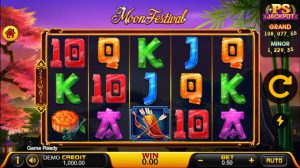
Progressive slots attract attention with jackpot meters that can grow far beyond a game’s ordinary awards. Yet the headline amount tells only part of the story. Eligibility rules, payout structures and taxes all affect what a winning player may receive.
For readers researching progressive slots through superace88, this guide explains how jackpot pools work, corrects common misconceptions and outlines the Philippine tax treatment of qualifying casino jackpots.
What Are Progressive Slots?
Progressive slots feature a jackpot that increases as qualifying bets contribute to its pool. When the jackpot is won, the meter usually returns to a specified starting amount and begins building again.
This differs from a fixed jackpot, whose advertised award does not grow with player contributions. A slot can also combine progressive tiers with fixed prizes, so every number displayed on the screen is not necessarily part of a growing pool.
The jackpot rules should identify the funding arrangement, starting value and any ceiling. These details help explain what the meter represents.
1. Progressive Jackpots Can Use Different Network Structures
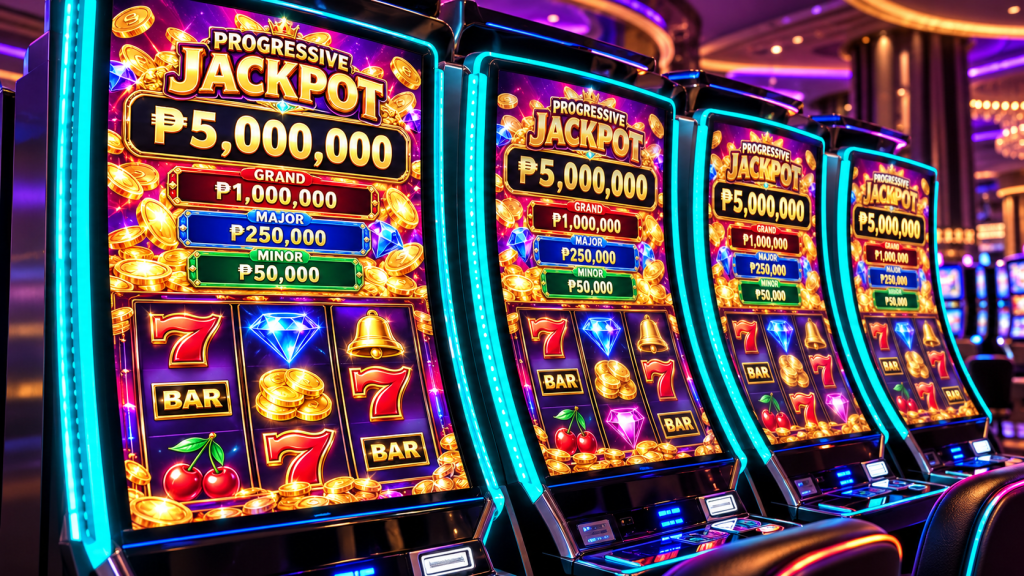
Some pools belong to one machine, while others connect several machines or participating venues. A shared network can collect contributions from a larger volume of play. Regulators and manufacturers describe both local and inter-casino progressive systems.
However, a network’s size does not tell you your individual chance of winning. Pool growth and jackpot probability are separate questions.
| Jackpot structure | How the pool is organized | Detail to check |
|---|---|---|
| Standalone progressive | Associated with an individual machine or game instance | Which bets contribute |
| Local linked progressive | Shared across a group of participating machines | Which machines share the meter |
| Wide-area progressive | Connects participating locations within an approved network | Geographic and eligibility restrictions |
| Online network progressive | Shared across participating online games or operators | Whether the same jackpot pool is used |
Do not assume every casino offering the same game participates in one worldwide pool. Network arrangements can differ by product and market.
2. A Large Jackpot Does Not Automatically Mean Better RTP
Return to Player, or RTP, describes a theoretical long-term return over a very large number of plays. It is not the percentage a player is promised during one session.
Progressive games can have a base-game return and a separate jackpot component. Because major jackpots are infrequent and large, they can substantially affect the distribution of returns. The UK Gambling Commission distinguishes base-game performance from jackpot performance when monitoring these systems.
It is therefore inaccurate to claim that every progressive slot has a double-digit house edge. Compare the actual game configuration instead of applying one percentage to the entire category.
When reading progressive slot information on superace88, check whether the displayed RTP includes the jackpot component and whether it applies to your chosen stake or eligibility setting.
| Term | Meaning | What it cannot tell you |
|---|---|---|
| RTP | Theoretical long-term return | Your result in one session |
| Theoretical house edge | Broadly, 100% minus the applicable RTP | Exactly what the operator keeps from your session |
| Volatility | How widely payouts fluctuate | When the next large award will occur |
| Jackpot meter | The displayed pool value | Your chance of winning it |
| Jackpot contribution | The portion allocated under the funding rules | A personal refund entitlement |
3. Maximum Bet Is Not a Universal Jackpot Requirement
The claim that every progressive slot requires the maximum bet is too broad. Jackpot eligibility depends on the game.
Possible conditions include a minimum qualifying stake, a separate jackpot wager or a particular credit setting. For example, some operator jackpot systems use an additional opt-in wager rather than simply requiring the maximum base-game stake.
Before a paid spin, check:
- Whether your selected stake qualifies for the advertised jackpot.
- Whether an optional wager is required.
- Whether different jackpot tiers have different conditions.
- Whether the award or probability changes with the wager.
Eligibility means you can participate under the rules; it does not mean the jackpot is likely. If a qualifying stake exceeds your planned budget, choose another game rather than increase spending solely to chase the prize.
4. “Must-Hit-By” Is a Specific Feature
Some jackpot products advertise a maximum amount by which the jackpot must be awarded. This is a defined game mechanic, as illustrated by certain Aristocrat titles.
A growing meter alone does not establish a deadline. Nor does a long period without a jackpot prove that it is due on your next spin.
For an ordinary random game with unchanged outcome probabilities, previous losses do not make the next result more favorable. Any advertised must-hit-by condition needs its own explanation.
5. Jackpot Funding Is More Complex Than One Winner Receiving Every Peso
A jackpot can include an initial seed, player-funded increments and arrangements for reserves or overflow. The funding rules determine how these components work.
Avoid the blanket claim that all money collected from a progressive machine must be paid to one winner by a universal deadline. Ordinary wagers also fund the base game, and progressive-pool rules vary across jurisdictions.
For example, UK technical standards specify fair handling of player contributions when a jackpot is discontinued, including possible transfer to another pool. That is a jurisdiction-specific example, not a statement of Philippine law.
6. Philippine Progressive Jackpot Winnings Can Be Taxable
The Philippines has its own tax rules; the original article’s US reporting threshold and “roughly one-third” withholding estimate do not apply here.
BIR Revenue Memorandum Circular No. 57-2026, dated May 26, 2026, clarifies that casino jackpots, including progressive jackpots, fall within gambling “winnings.” For individuals covered by Section 24(B)(1), qualifying winnings are subject to 20% final withholding tax. The circular specifies 25% for nonresident aliens not engaged in trade or business in the Philippines.
The tax base is the gross jackpot, before service charges, administrative fees or commissions. Readers of superace88 should confirm the relevant taxpayer classification and income source rather than assume one rate applies to every winner.
Do Not Confuse Casino Winnings With PCSO Lotto
Section 24(B)(1), as amended by Republic Act No. 12214, distinguishes ordinary prizes, gambling winnings and PCSO/Lotto winnings.
| Category under Section 24(B)(1) | General treatment |
|---|---|
| Philippine-source casino or progressive-slot winnings | 20% final tax; no general ₱10,000 casino-winnings exemption |
| Ordinary non-gambling prizes above ₱10,000 | 20% final tax |
| Ordinary non-gambling prizes of ₱10,000 or less | Regular income-tax treatment, rather than automatic exemption |
| Philippine Charity Sweepstakes/Lotto winnings of ₱10,000 or less | Exempt |
| Philippine Charity Sweepstakes/Lotto winnings above ₱10,000 | 20% final tax |
These categories should not be merged into a claim that all Philippine winnings below ₱10,000 are tax-free. chief.lawphil.net
Philippine Peso Jackpot Examples
The following illustrations assume a Philippine-source jackpot subject to the 20% rate. They exclude any separate lawful fees or other adjustments.
| Gross jackpot | Illustrative final tax at 20% | Amount after that tax |
|---|---|---|
| ₱50,000 | ₱10,000 | ₱40,000 |
| ₱100,000 | ₱20,000 | ₱80,000 |
| ₱1,000,000 | ₱200,000 | ₱800,000 |
| ₱5,000,000 | ₱1,000,000 | ₱4,000,000 |
For comparison, a ₱1,000,000 jackpot subject to the 25% nonresident-alien rate would leave ₱750,000 after that tax.
A withholding agent or gaming operator must withhold and remit the applicable tax where required. Keep the award statement and withholding documentation.
Offshore winnings and cross-border cases need separate assessment; an online payment in pesos alone does not determine its tax treatment.
7. The Advertised Jackpot May Differ From the Amount Received
Tax is one reason the final payout may be lower than the headline award. Payment structure is another.
Before interpreting a jackpot advertisement, check whether it describes a lump sum, installments or another payment arrangement. Also review the verification process and whether the display represents a gross amount.
A promotional bonus is a separate offer. Its wagering conditions and restrictions should not be confused with the game’s jackpot rules.
Frequently Asked Questions About Progressive Slots
Can a smaller stake qualify for a progressive jackpot?
Possibly. Eligibility depends on the game’s published rules, so maximum bet should never be assumed to be mandatory.
Does a bigger pool guarantee a win soon?
No. A large meter does not reveal the next result. A specific must-hit-by mechanic should be understood through its stated conditions.
Can previous spins predict the jackpot?
For ordinary random games with unchanged probabilities, a sequence of losses does not provide a reliable prediction. Special jackpot mechanics must be assessed separately.
Are Philippine casino jackpots below ₱10,000 automatically exempt?
No general casino-winnings exemption should be assumed. The statutory exemption for small PCSO/Lotto winnings is a separate category.
Conclusion
Progressive slots combine ordinary gameplay with a growing prize pool, but the most useful facts are often found in the rules rather than the headline amount.
For superace88 readers, an informed approach means checking jackpot eligibility, the applicable RTP, payout conditions and Philippine tax treatment before committing money. Set an affordable entertainment limit and avoid treating a rare jackpot as a plan for income.